

5th Grade Unit 10: Landforms – STEAMspirations Level Up 2.0
5th Grade Unit 10: Landforms – STEAMspirations Level Up 2.0
Couldn't load pickup availability
- Learning resource
- Order support
- Secure Checkout
Download & order support
Download & order support
Need help downloading or opening a file, or received an incorrect or defective item? Contact us with your order number so we can help. Delivered PDFs are not refundable for change of mind. See our Refund Policy for full terms.
How does it work?
How does it work?
For a PDF or digital resource, complete checkout using your email address. You will receive an email with a download link. Download and save your files, then follow the included instructions. No physical book or supplies are shipped for digital purchases. Check the product description and selected format before ordering.
Customer support
Customer support
We are committed to providing exceptional customer support, available to assist you 24 hours a day, 7 days a week. Whether you have questions about our ebook, encounter any issues with downloading or accessing it, or require assistance with any aspect of your learning journey, our dedicated support team is here to provide prompt and reliable assistance whenever you need it.
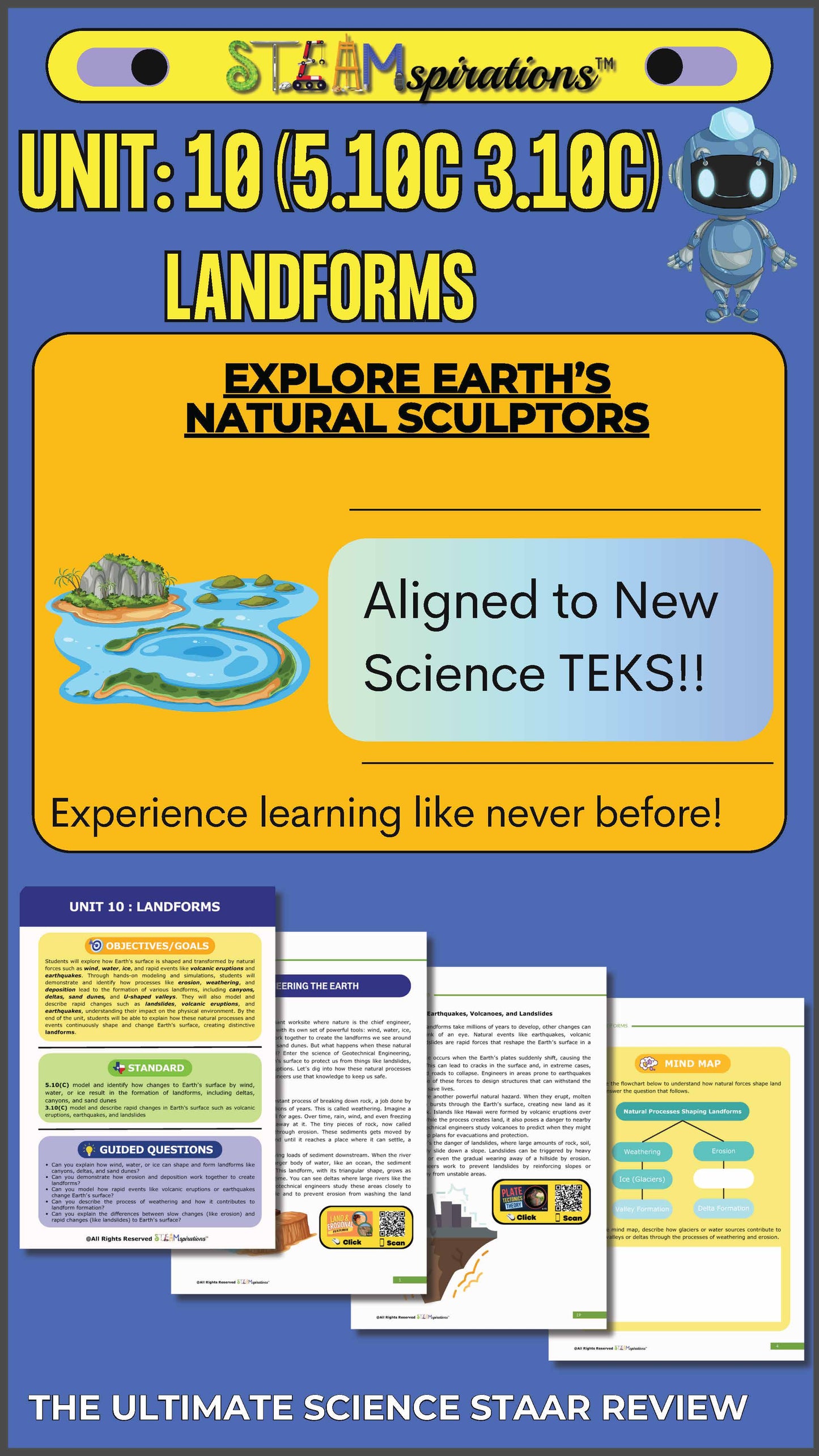
Unit 10 Science Curriculum: Landforms
Take 5th-grade students on a journey through Earth’s dynamic processes that shape and reshape its surface. Aligned with updated TEKS standards, this curriculum introduces students to the forces behind landforms and equips them with practical knowledge through hands-on activities, real-world applications, and STEM-based learning.
1. Mastering Foundational Knowledge
Objective Focus
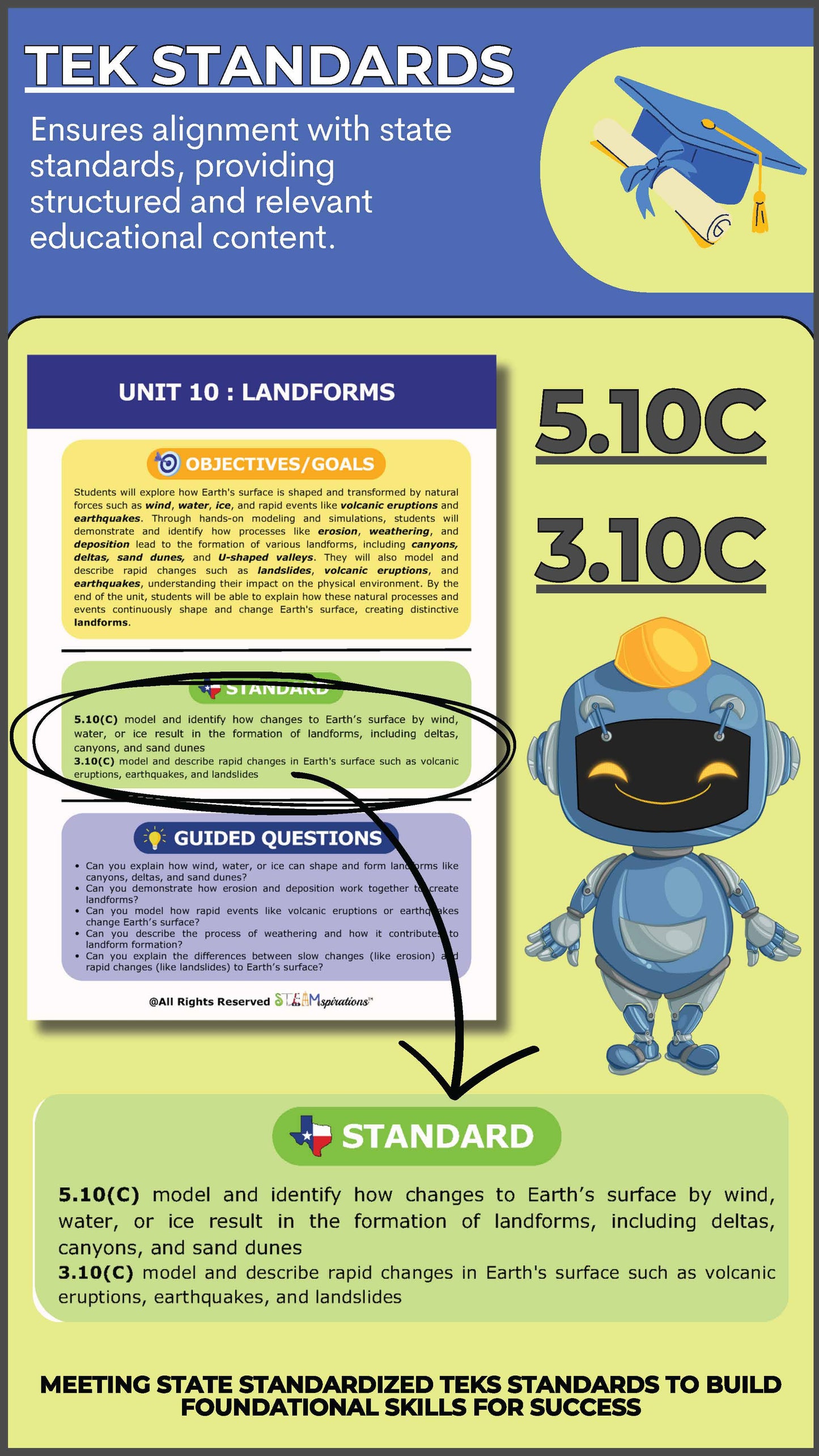
Students will model and describe how wind, water, and ice transform Earth’s surface over time to create landforms such as deltas, canyons, sand dunes, and U-shaped valleys. They will also explore rapid changes like volcanic eruptions, earthquakes, and landslides, learning how these events impact the physical environment.
Interactive Learning Tools
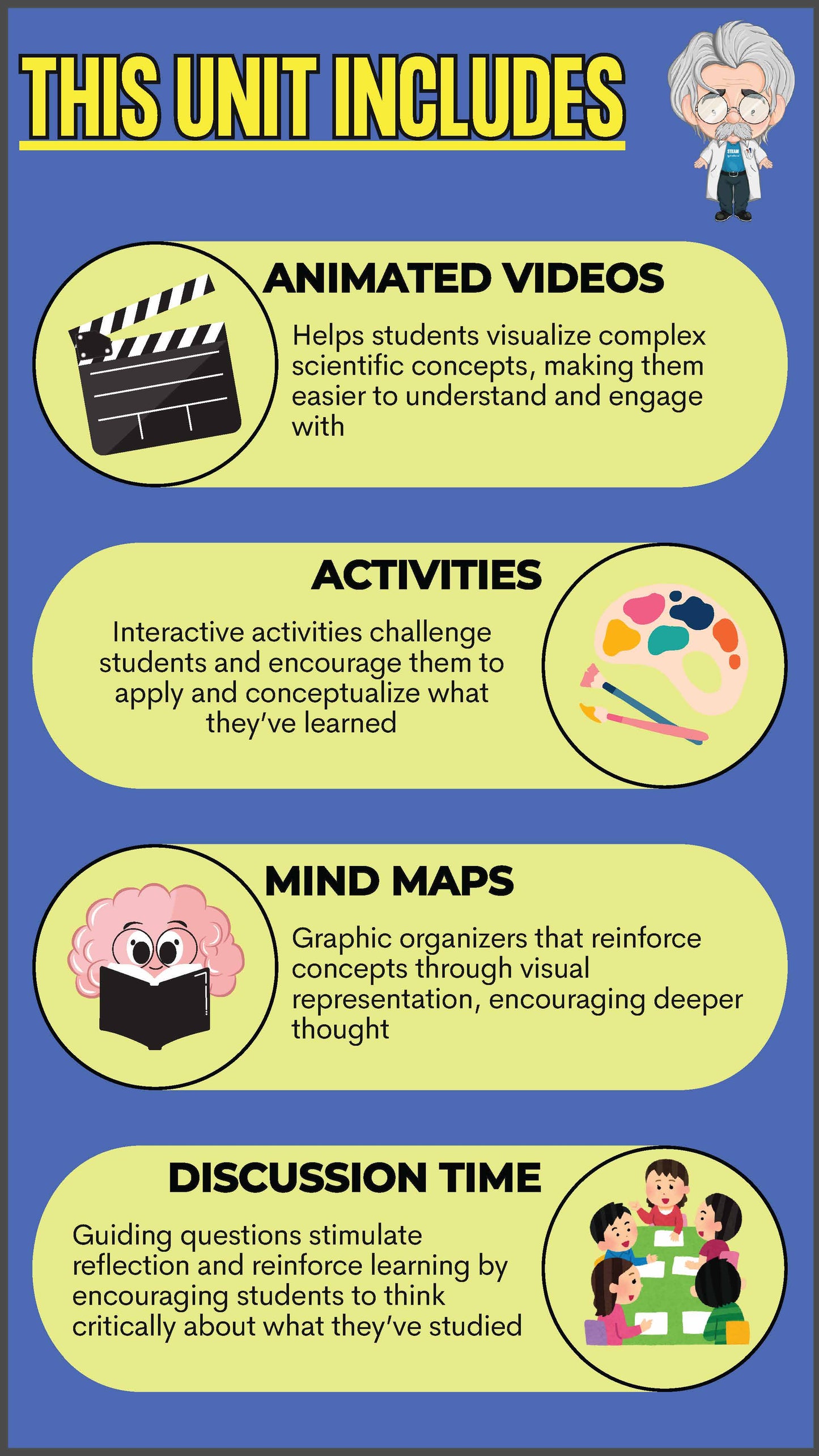
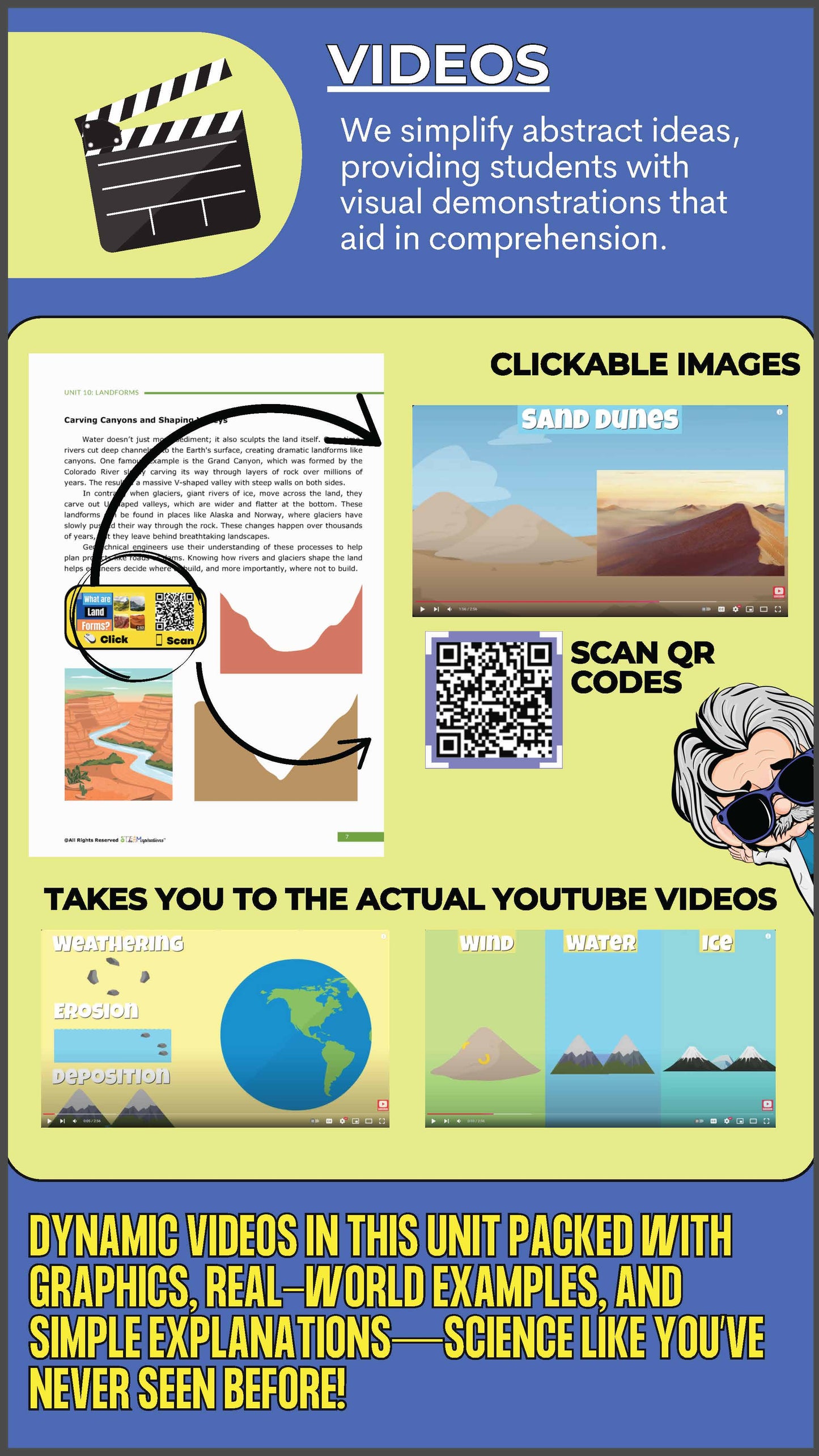
- Animated Videos: Visualizing the processes that form and change landforms.
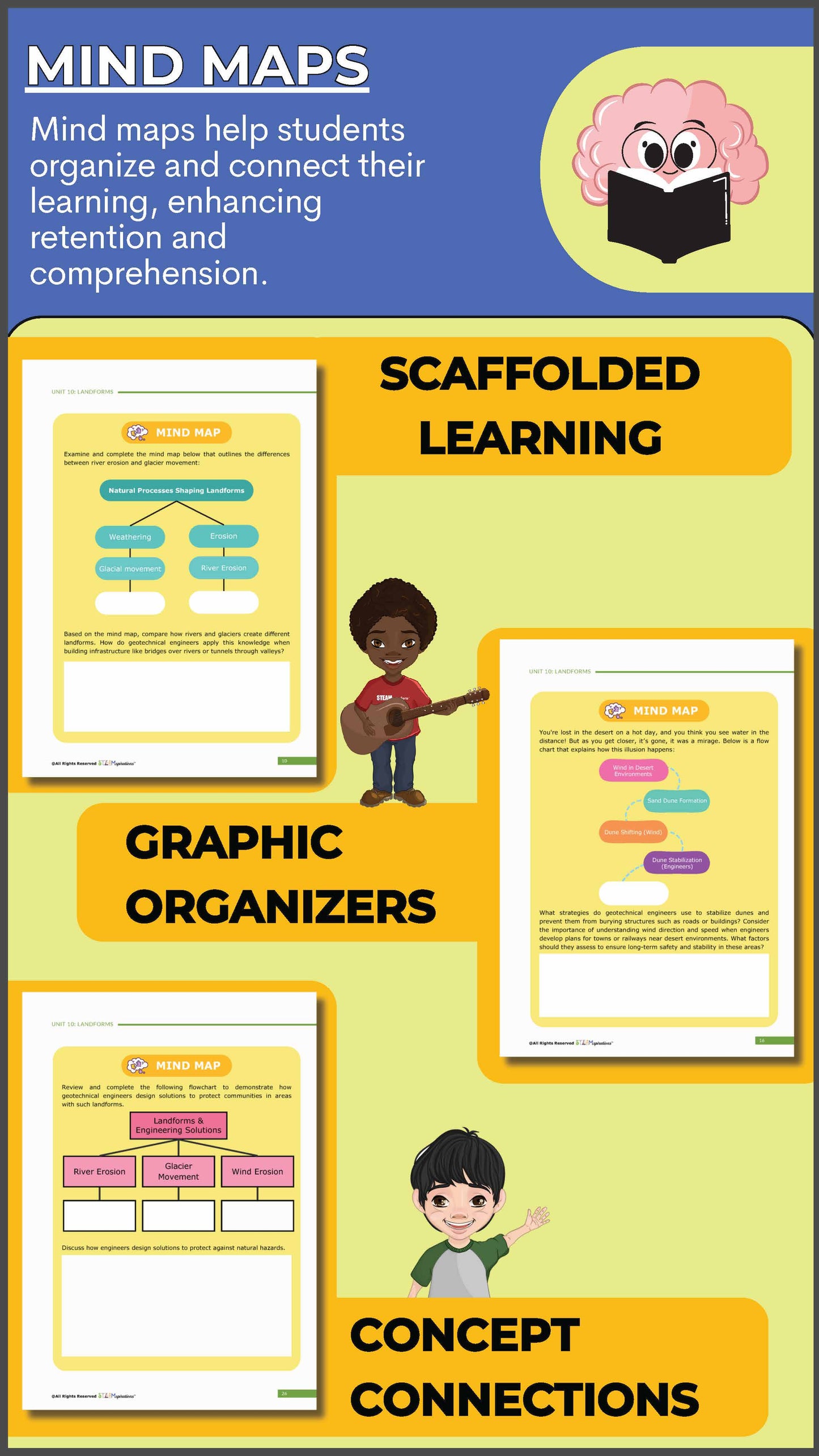
- Mind Maps and Flowcharts: Connecting natural forces to landform creation.
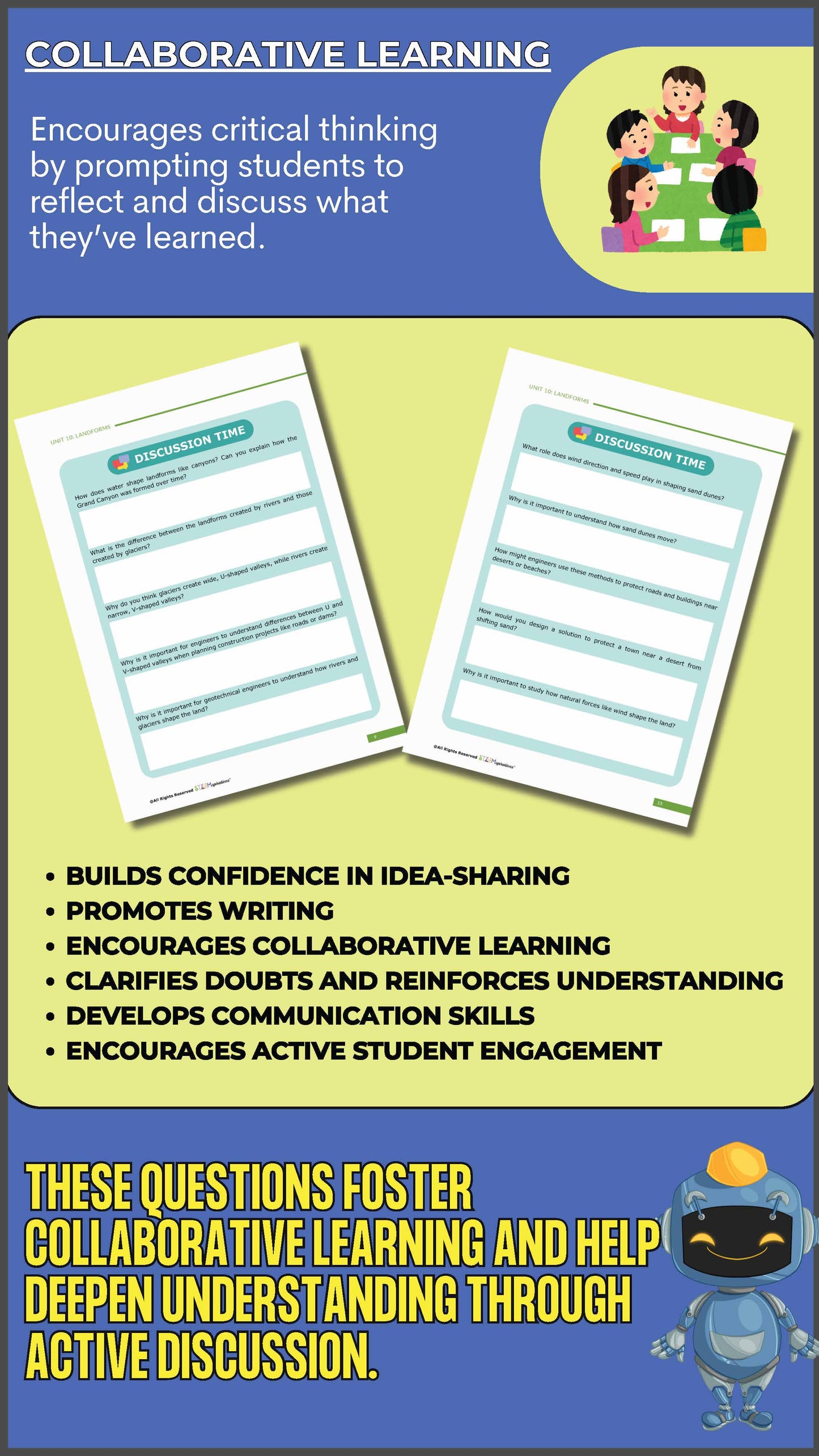
- Discussion Time: Stimulating critical thinking about the causes and effects of landform changes.
2. Immersive Hands-on Experimentation
Real-World Experiments
Students will engage in exciting experiments, including:
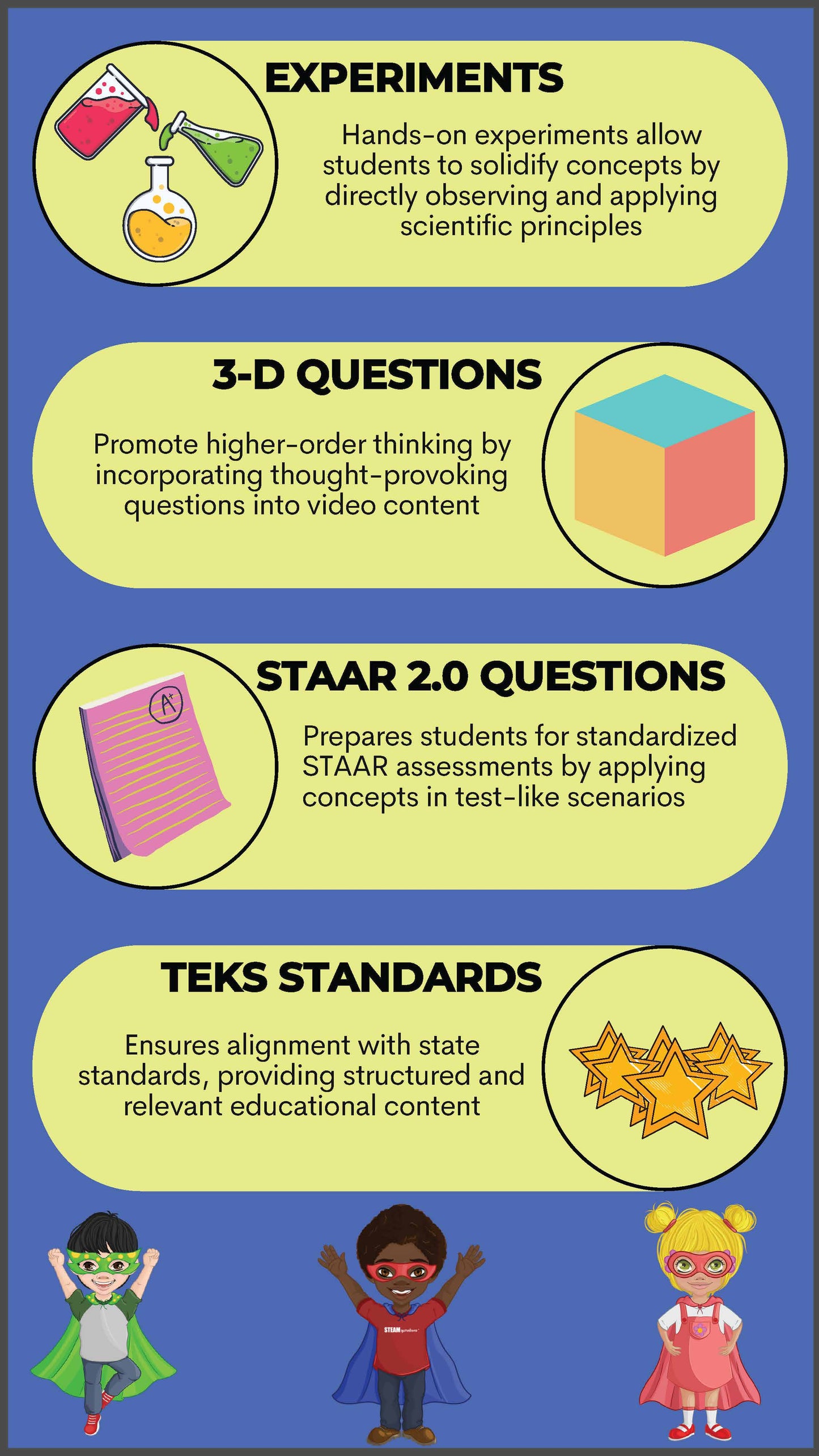
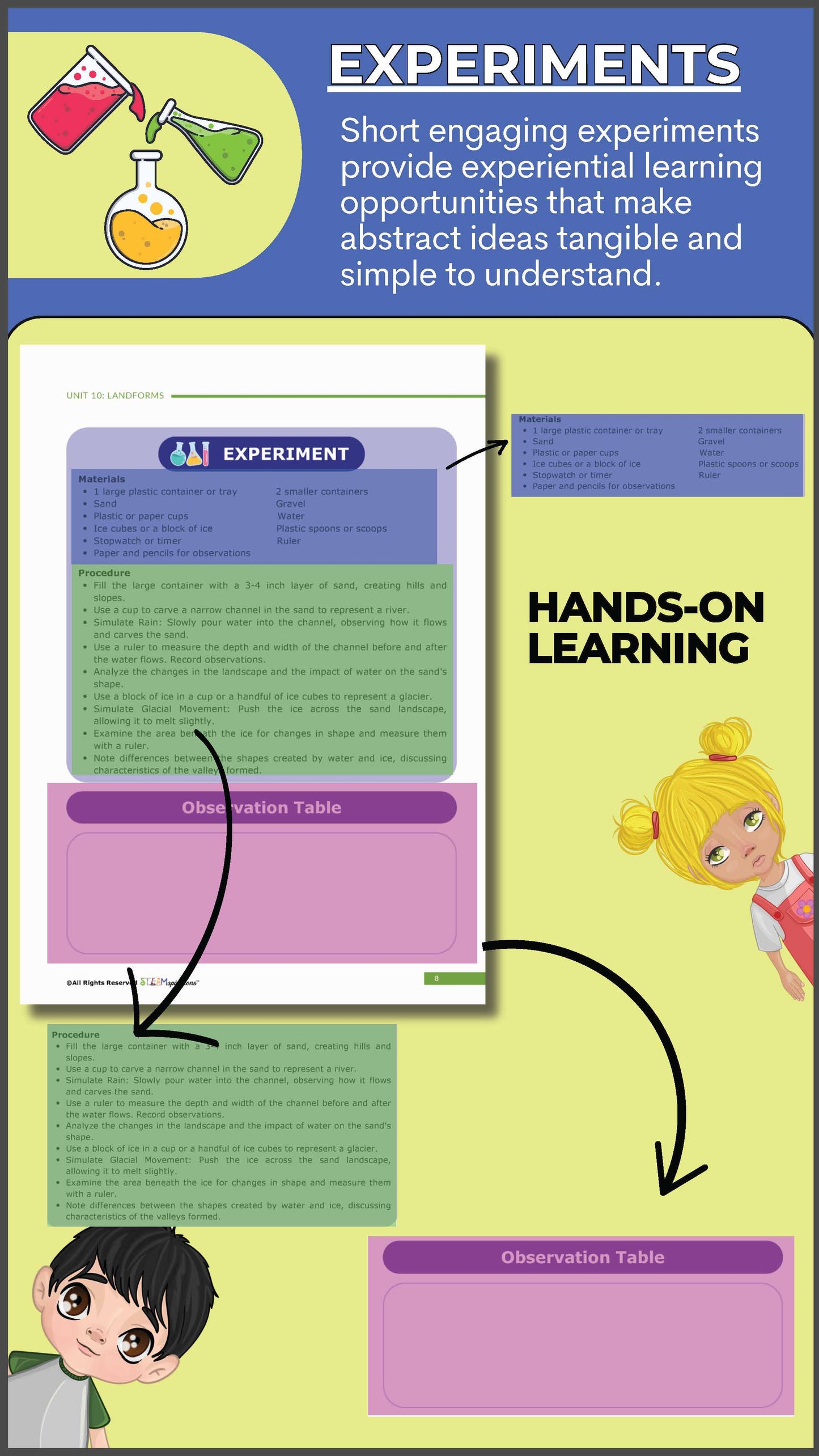
- Simulating Erosion and Deposition: Using sand, water, and wind to model landform changes.
- Exploring Rapid Events: Simulating landslides and volcanic eruptions to observe their immediate effects.
- Comparing Valleys: Modeling the differences between U-shaped and V-shaped valleys.
These activities provide practical applications of Earth’s natural processes.
3. Thematic Focus on Engineering and Natural Hazards
Science Meets Safety
This unit explores how geotechnical engineers study and manage landforms, developing solutions to mitigate the impact of natural hazards like landslides, earthquakes, and shifting sand dunes.
Connecting STEM Concepts
- Erosion and Stability: Understanding how to reinforce unstable landscapes.
- Engineering for Safety: Applying knowledge of landforms to create safer communities.
4. Structured and Scaffolding Learning Approach
Building Foundational Concepts
Concepts are introduced systematically with scaffolded activities, guided inquiry, and hands-on experiments to ensure a comprehensive understanding of landform creation and transformation.
Enhanced Learning Pathways
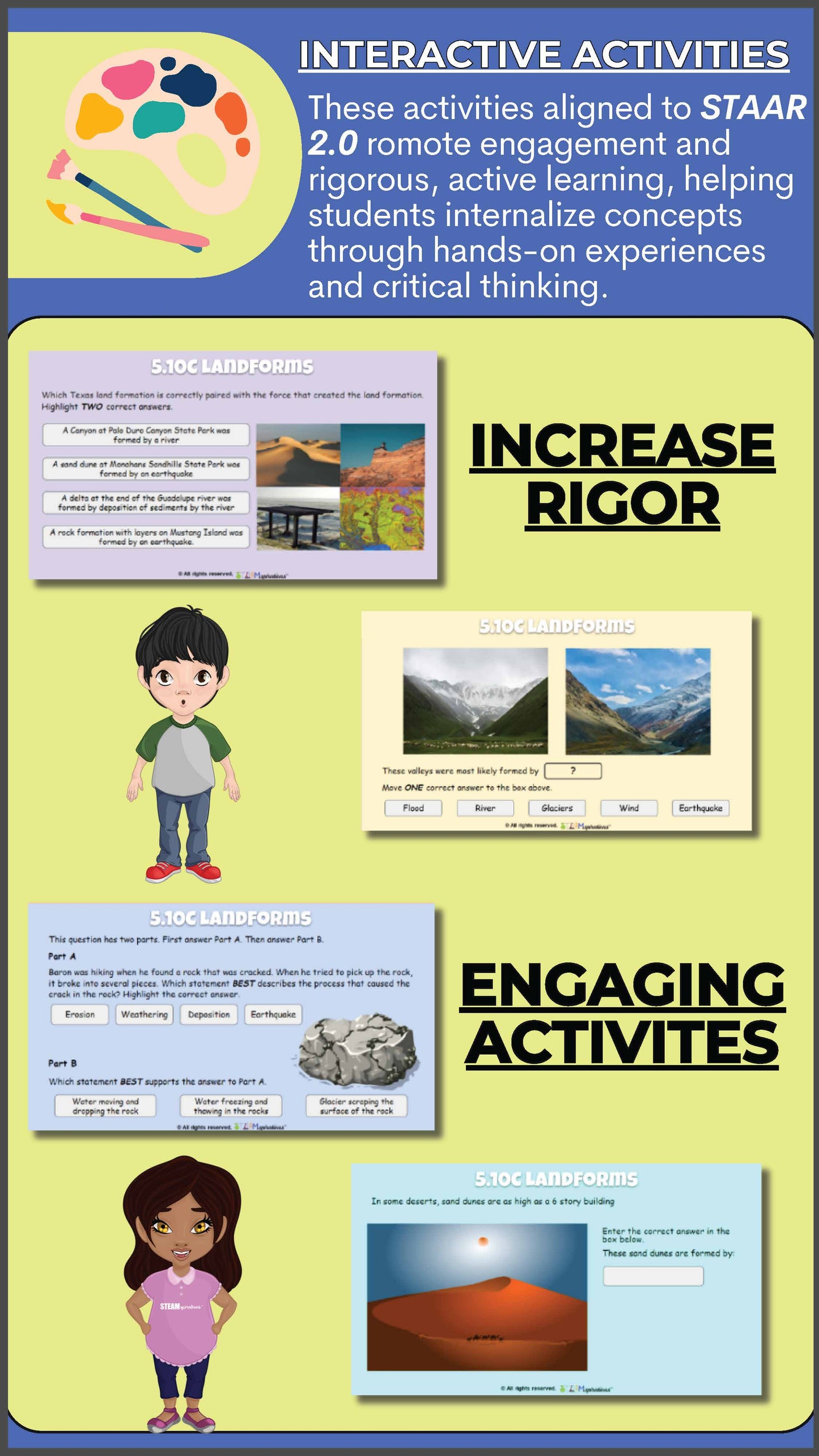
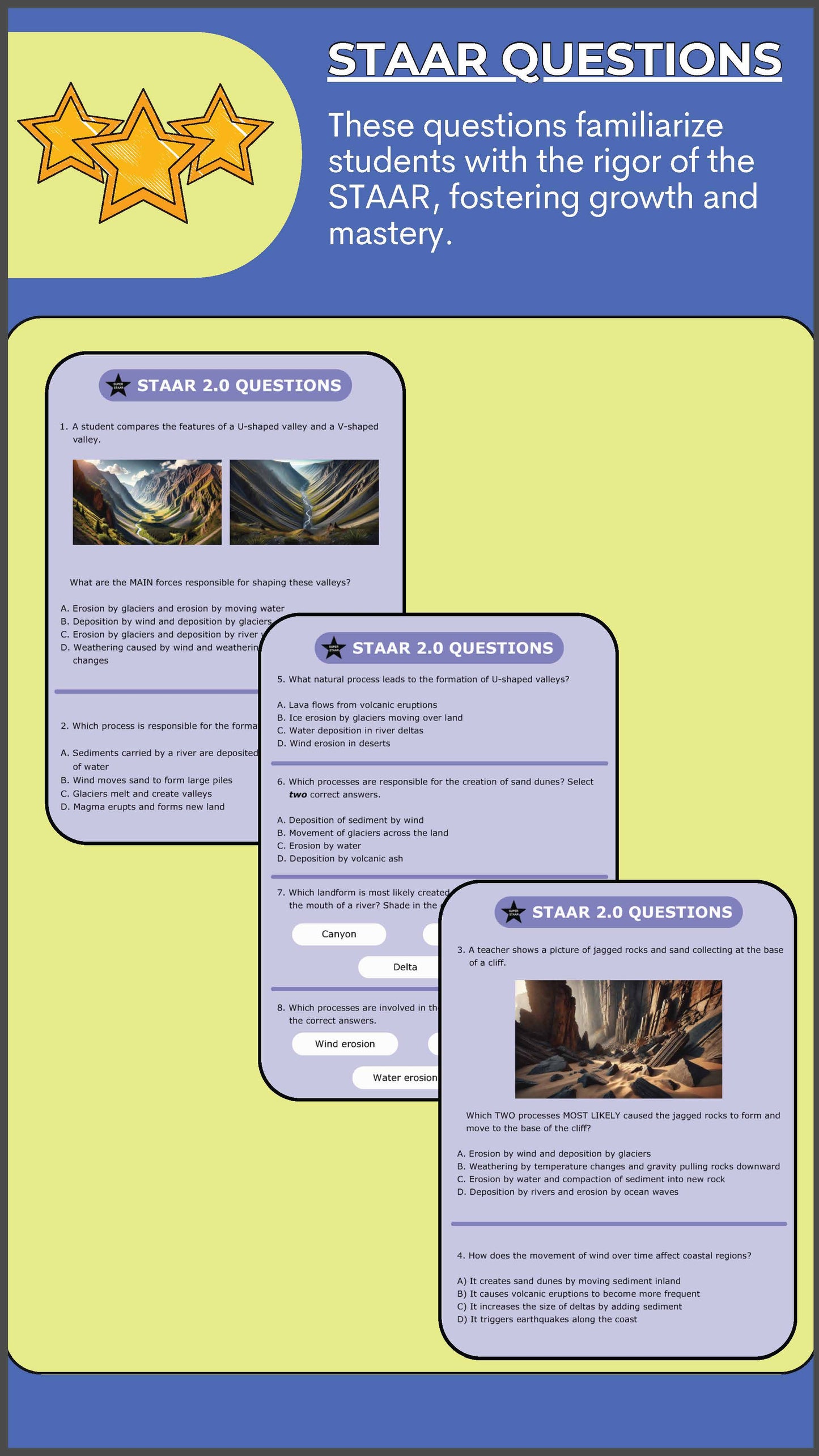
- Interactive Activities: Aligned with STAAR 2.0 standards to deepen rigor and engagement.
- Collaborative Learning: Promoting teamwork and problem-solving through shared tasks.
5. Critical Thinking Through Guided Inquiry
Incorporating 3-D questions, students analyze, predict, and evaluate scenarios involving landform creation and the impact of natural hazards. These inquiries encourage deeper exploration of Earth’s dynamic processes.
6. Assessment and Mastery Focus
TEKS and STAAR 2.0 Alignment
Periodic assessments and STAAR 2.0-aligned questions ensure students master key concepts, building confidence and readiness for future academic success.