5th Grade Unit 7: The Solar System – STEAMspirations Level Up 2.0
5th Grade Unit 7: The Solar System – STEAMspirations Level Up 2.0
Couldn't load pickup availability
- Learning resource
- Order support
- Secure Checkout
Download & order support
Download & order support
Need help downloading or opening a file, or received an incorrect or defective item? Contact us with your order number so we can help. Delivered PDFs are not refundable for change of mind. See our Refund Policy for full terms.
How does it work?
How does it work?
For a PDF or digital resource, complete checkout using your email address. You will receive an email with a download link. Download and save your files, then follow the included instructions. No physical book or supplies are shipped for digital purchases. Check the product description and selected format before ordering.
Customer support
Customer support
We are committed to providing exceptional customer support, available to assist you 24 hours a day, 7 days a week. Whether you have questions about our ebook, encounter any issues with downloading or accessing it, or require assistance with any aspect of your learning journey, our dedicated support team is here to provide prompt and reliable assistance whenever you need it.
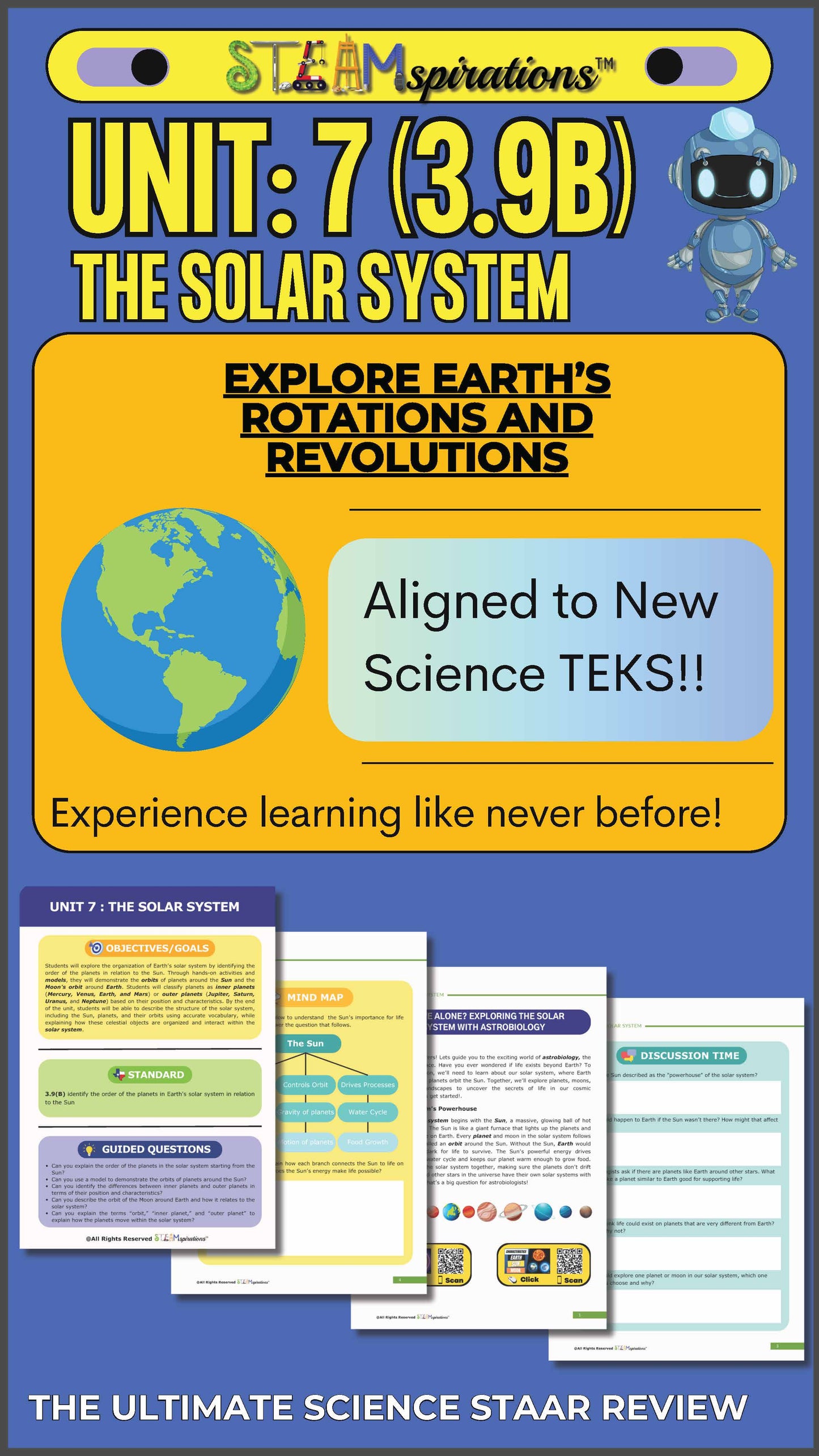
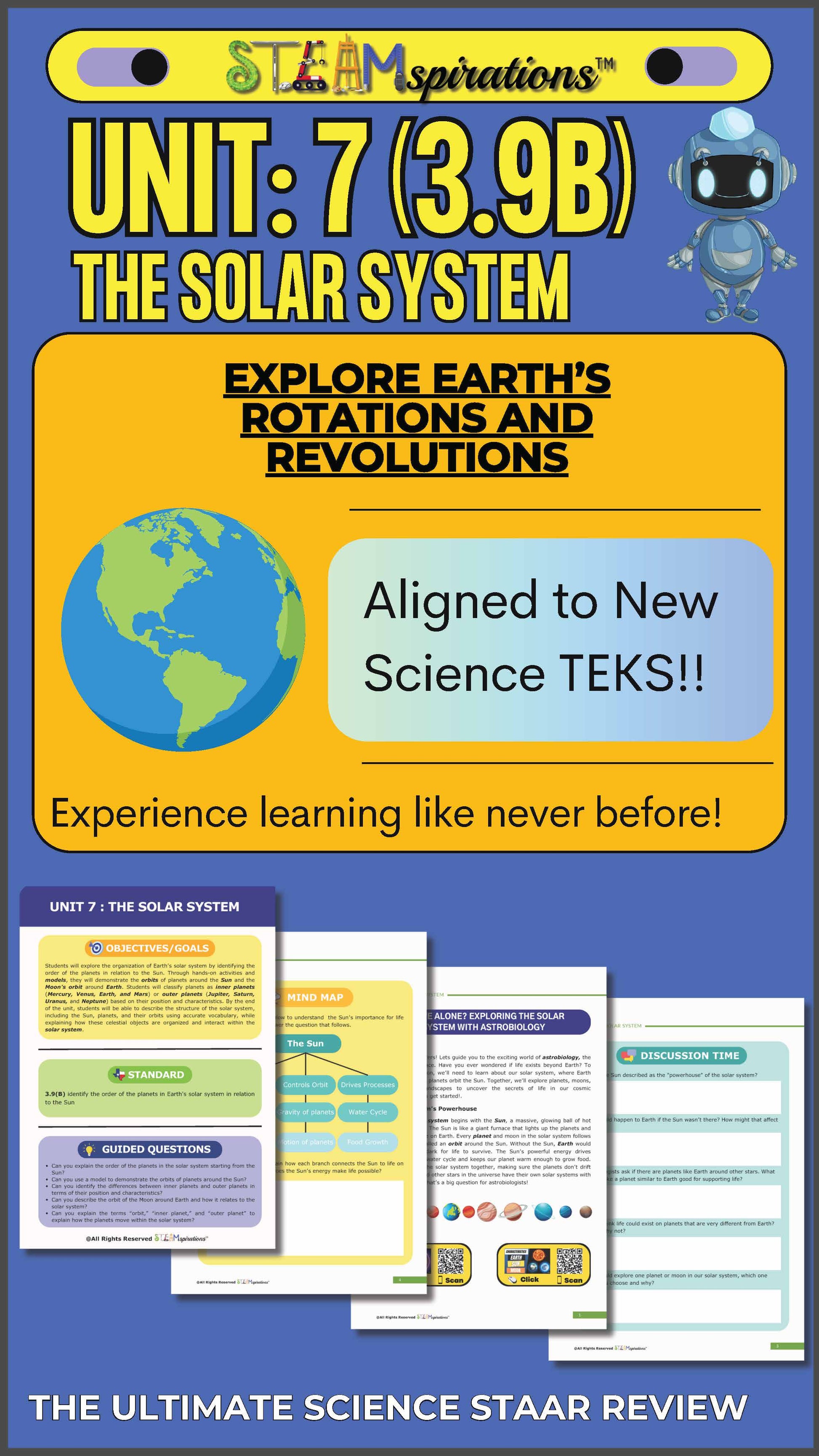
Unit 7 Science Curriculum: The Solar System
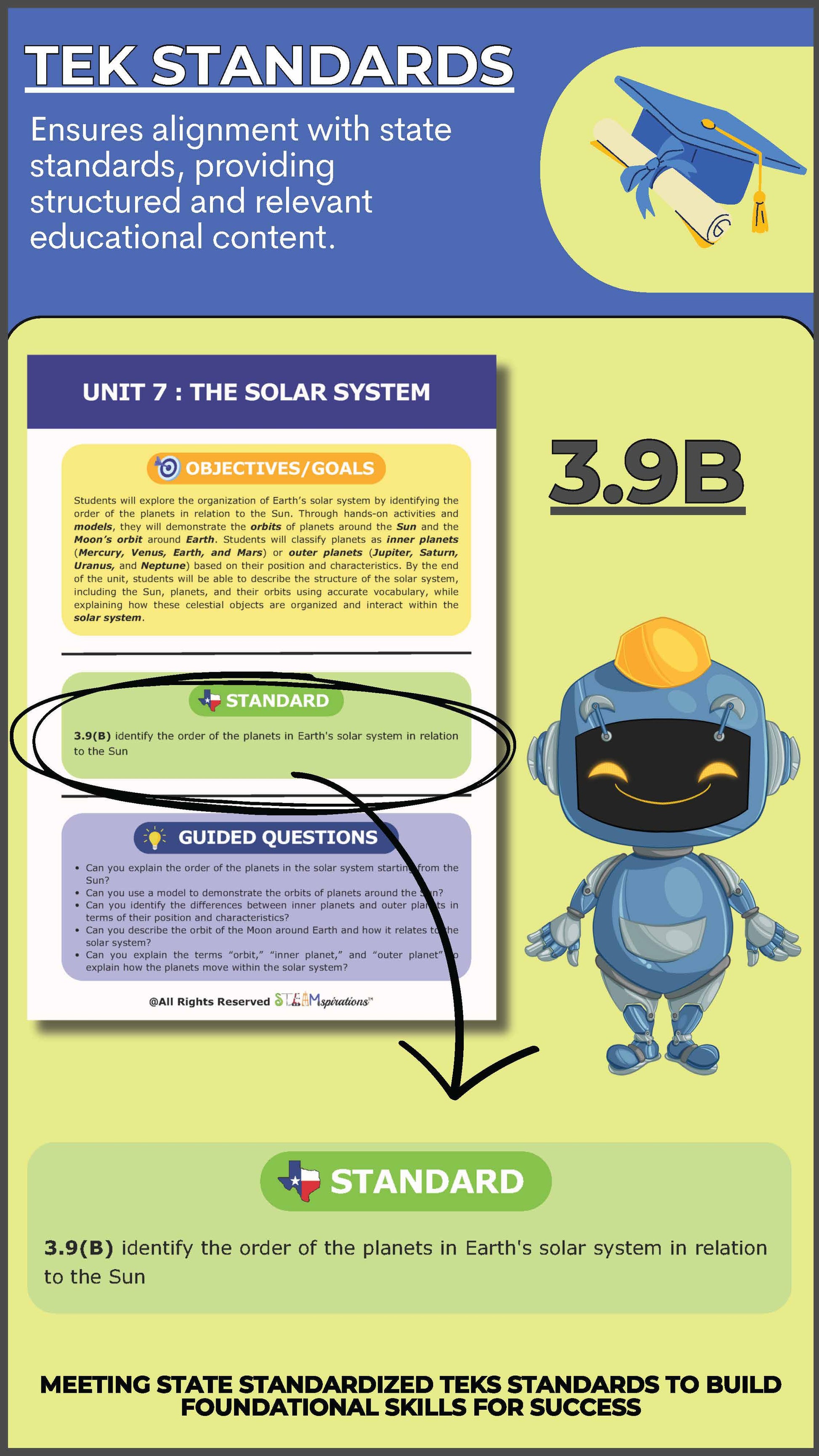
Take 5th-grade students on an astronomical journey to discover the wonders of Earth’s solar system. This unit blends hands-on activities, real-world exploration, and STEM applications to uncover the secrets of planets, moons, and the Sun’s role in holding the solar system together. Aligned with updated TEKS standards, this curriculum fosters curiosity and critical thinking about our cosmic neighborhood.
1. Mastering Foundational Knowledge
Objective Focus
Students will investigate the structure of the solar system, including the Sun, inner and outer planets, and moons. They will learn the order of the planets and classify them by position and characteristics. Additionally, students will explore the concept of orbits and how celestial bodies interact.
Interactive Learning Tools
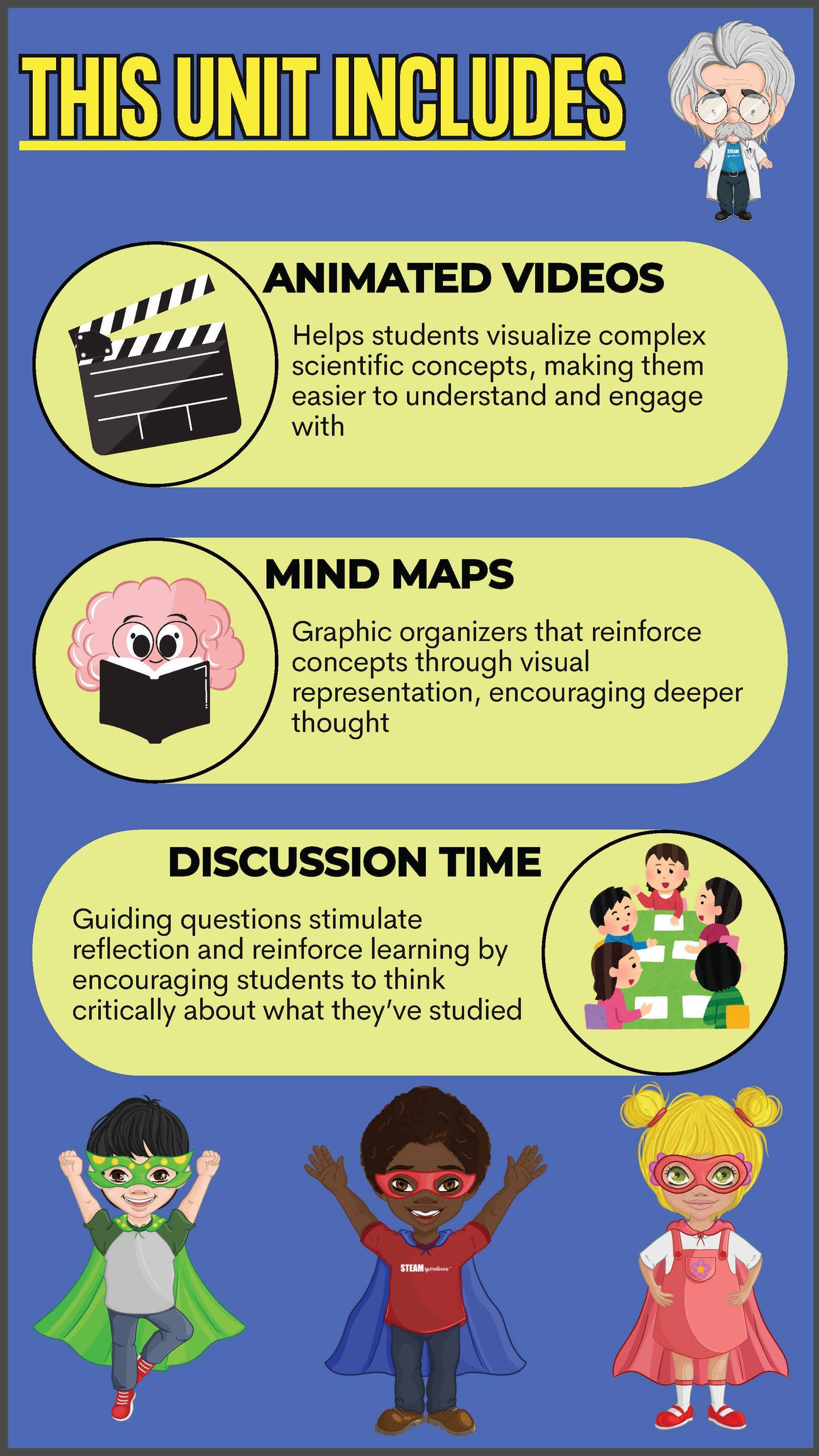
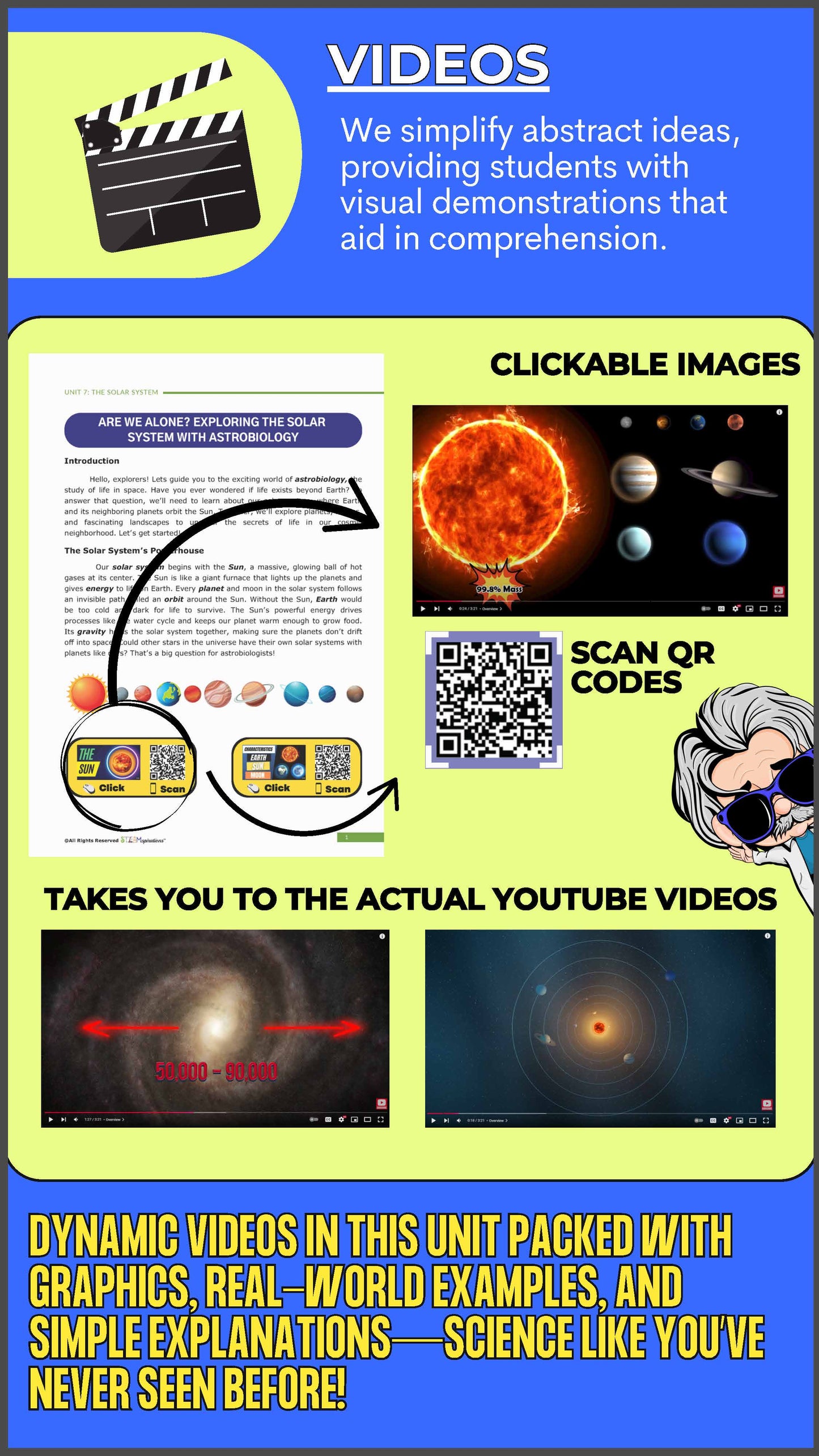
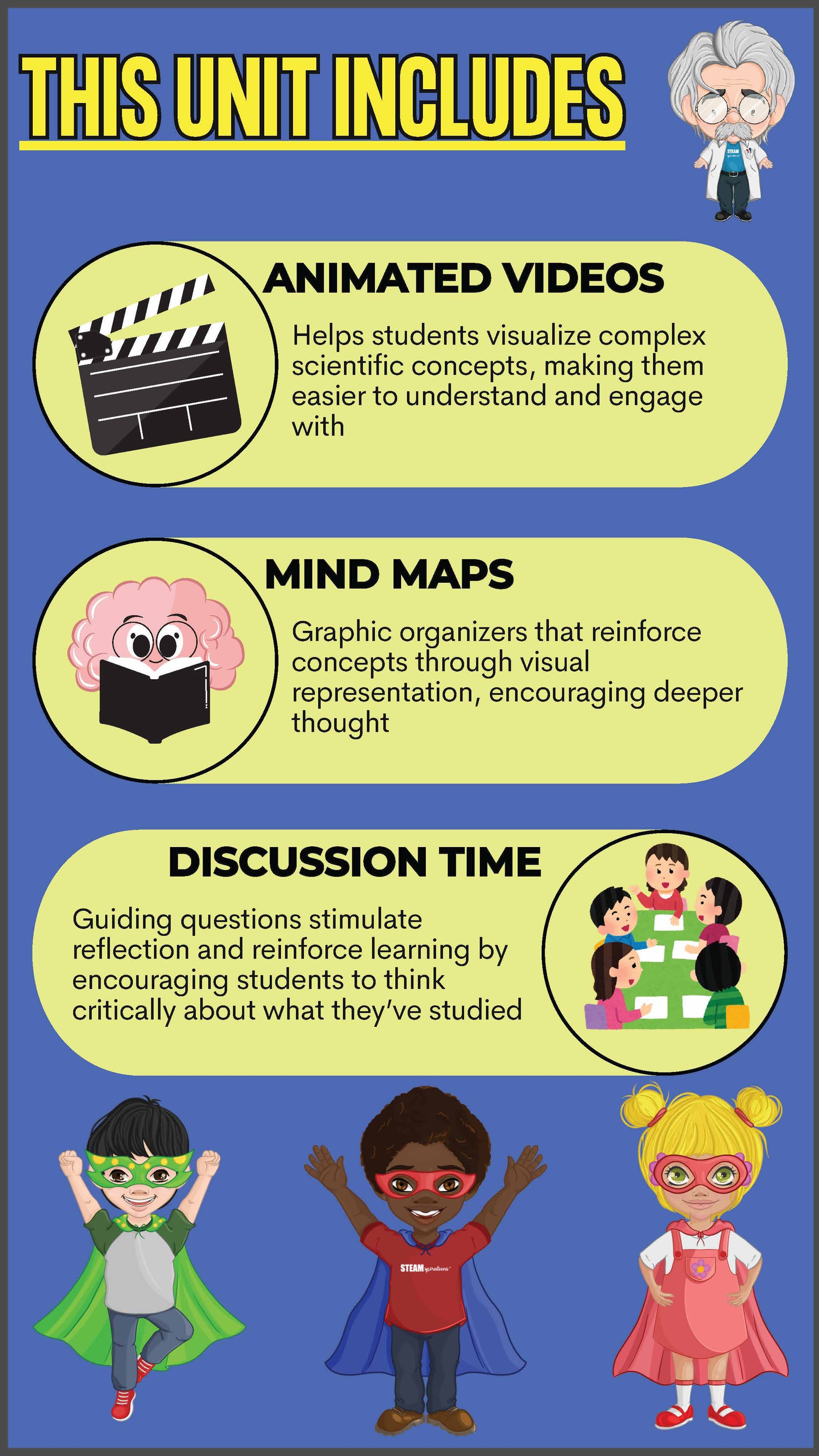
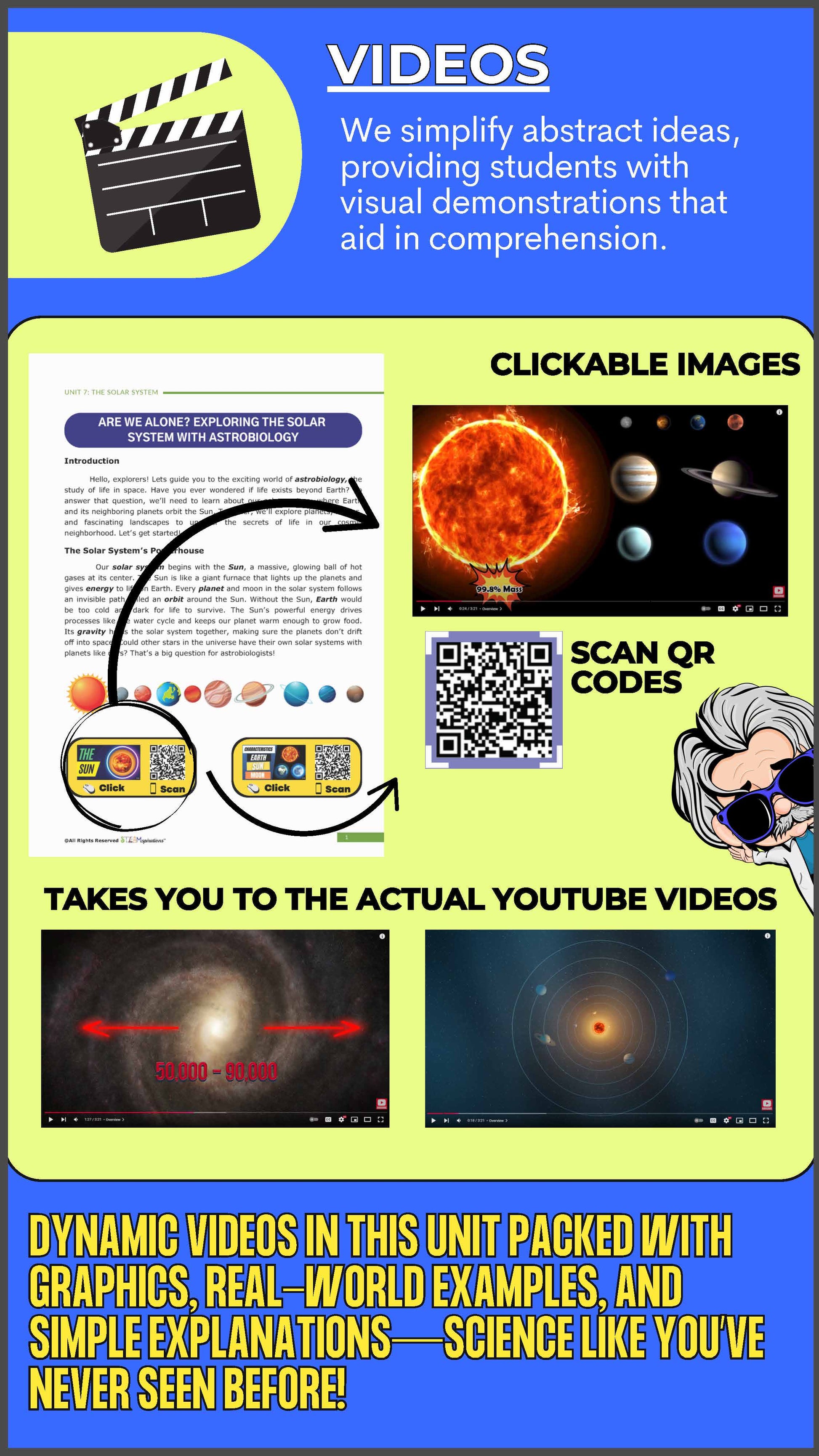
- Animated Videos: Visualizing planetary orbits and the Sun’s role in the solar system.
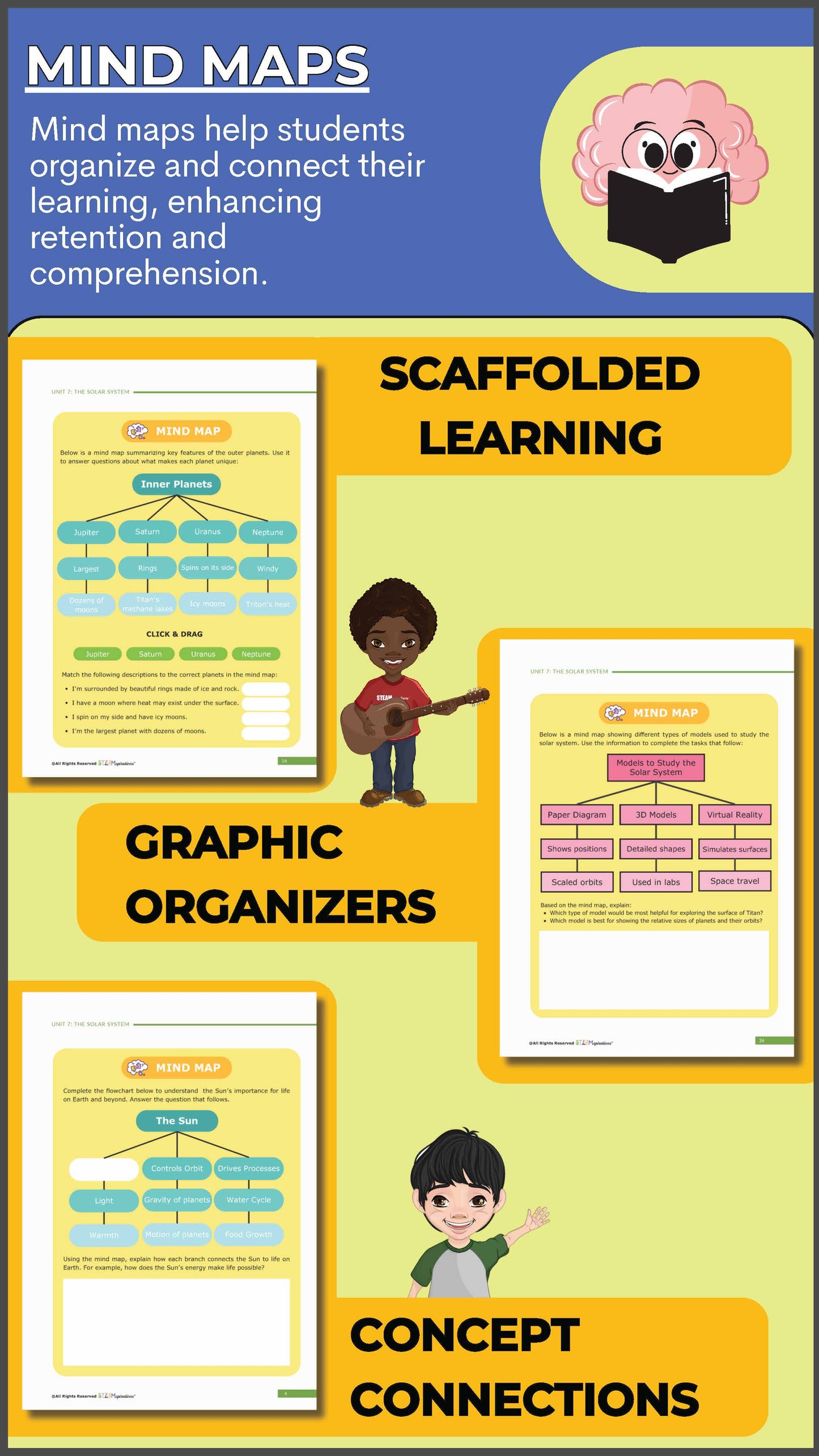
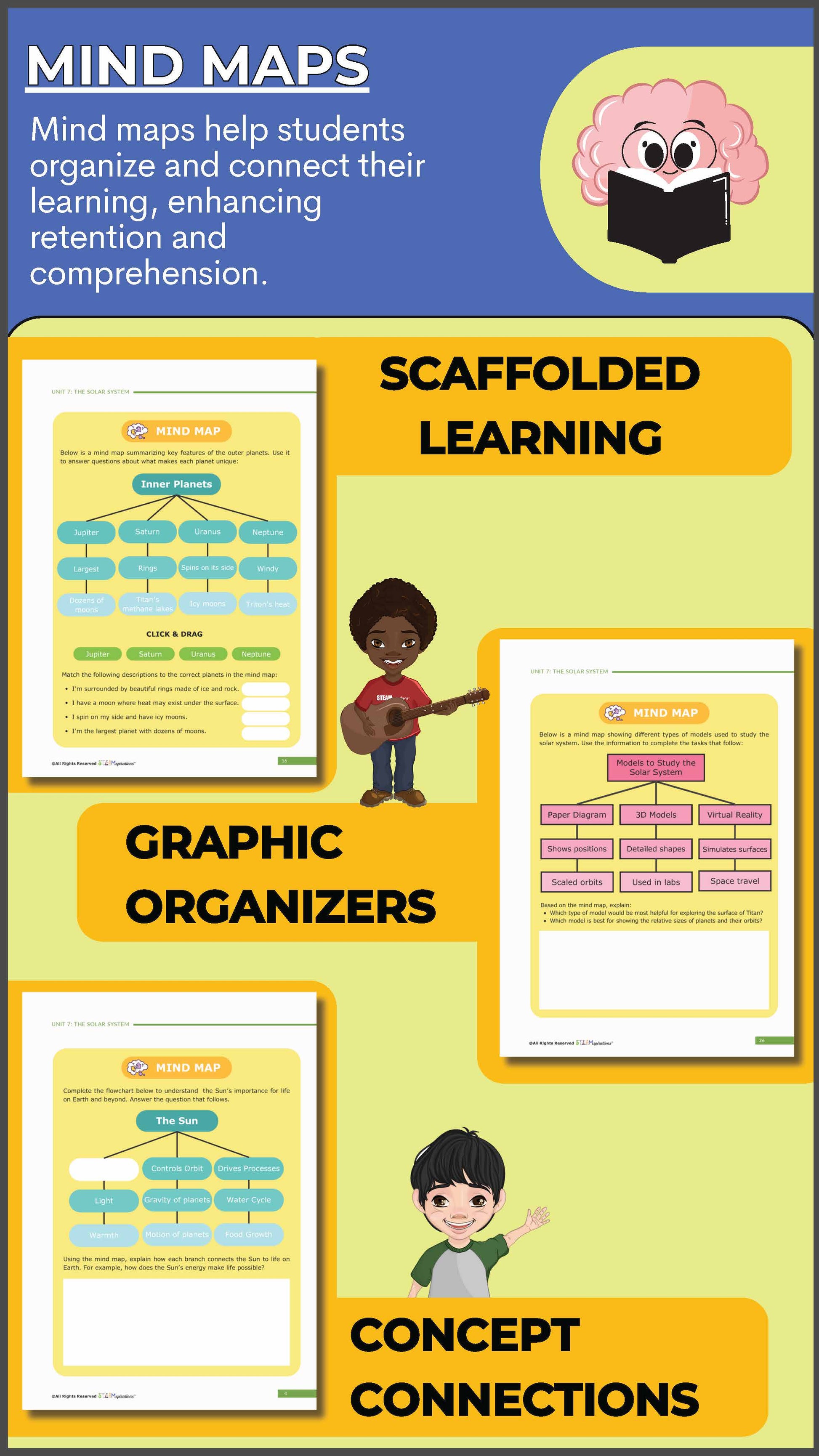
- Mind Maps and Graphic Organizers: Helping students connect celestial objects and their unique features.
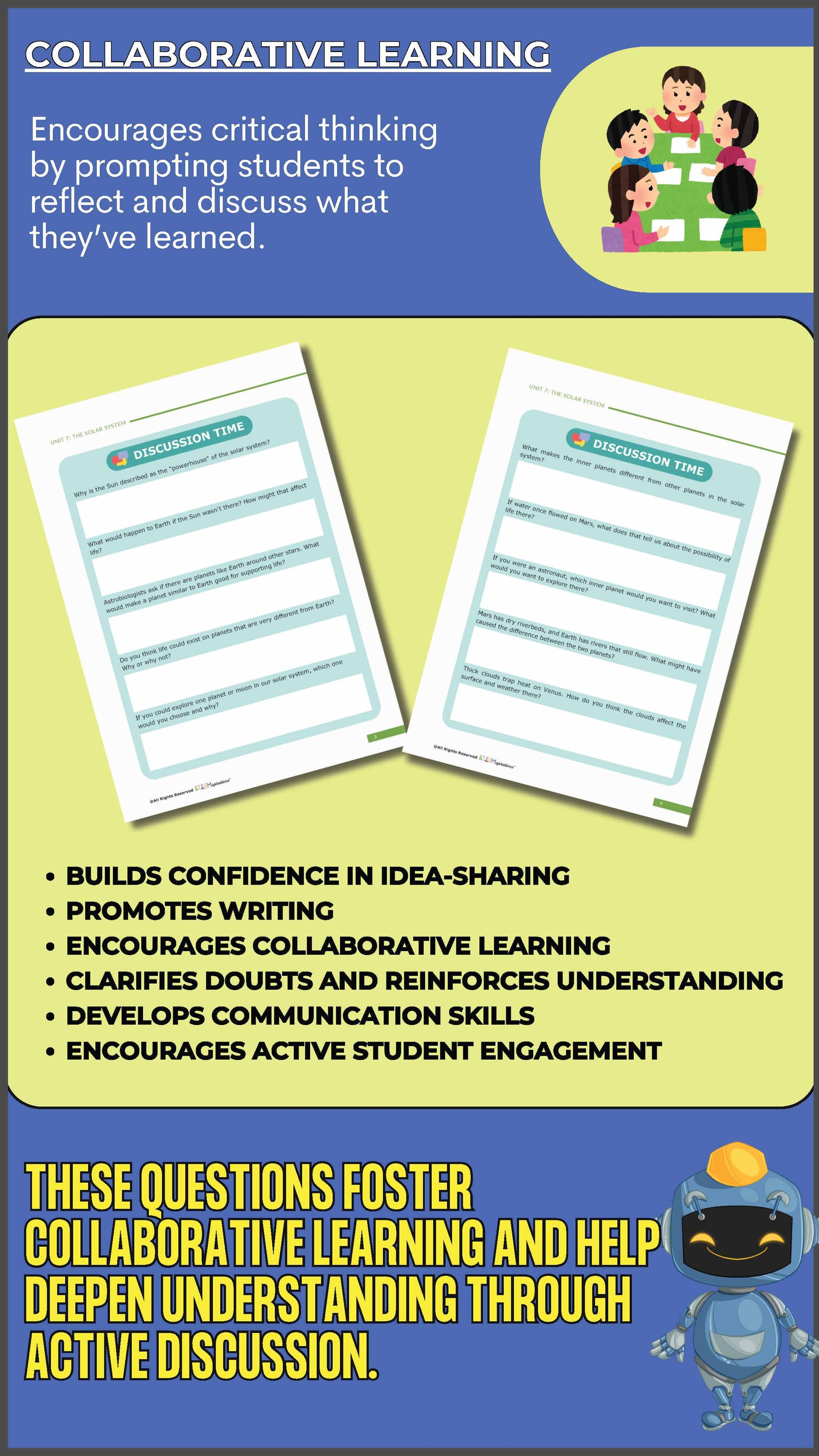
- Discussion Time: Guiding questions that foster critical thinking about the solar system's organization and potential for life.
2. Immersive Hands-on Experimentation
Real-World Experiments
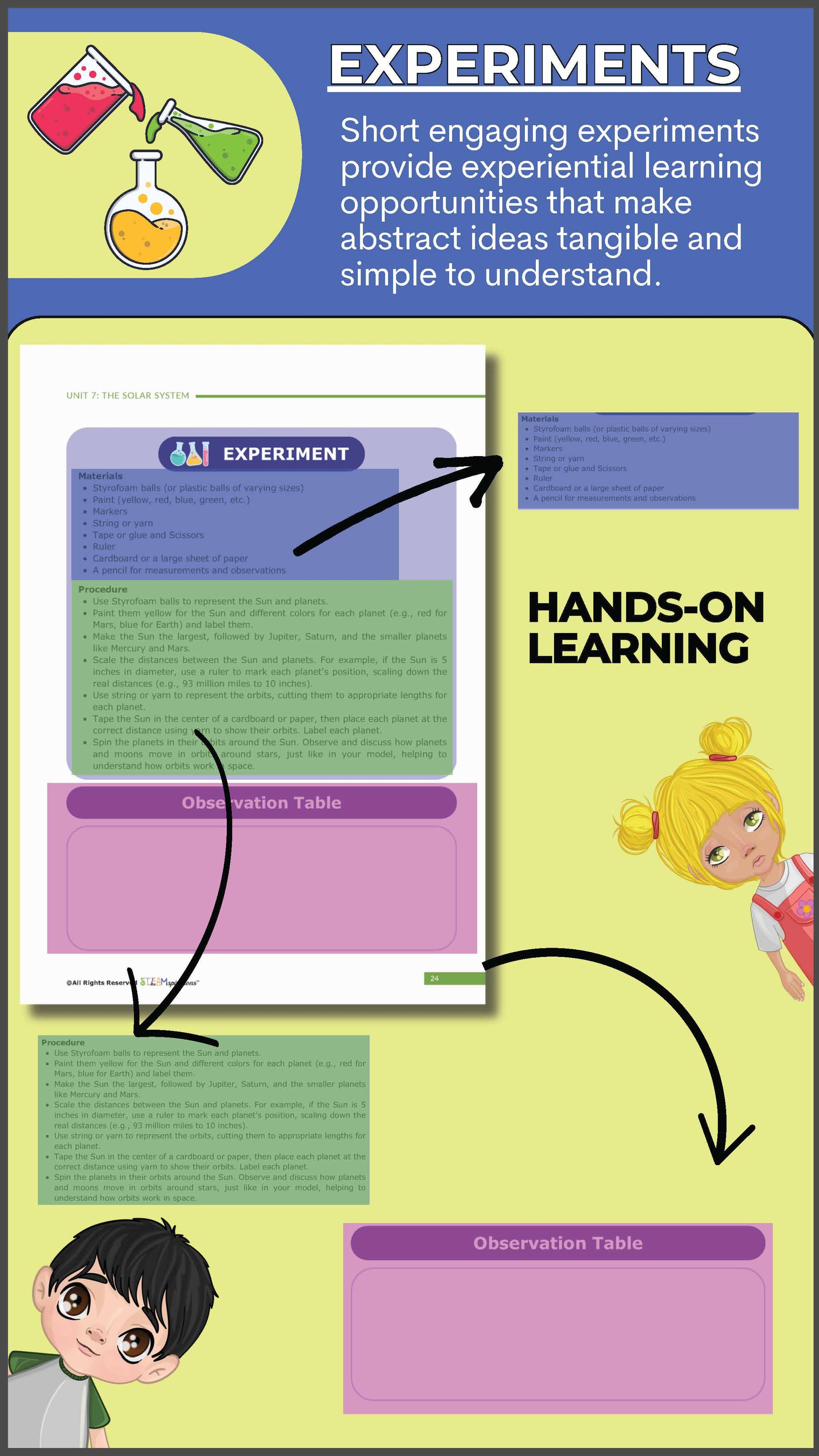
Students will conduct experiments to model and understand celestial movements, such as:
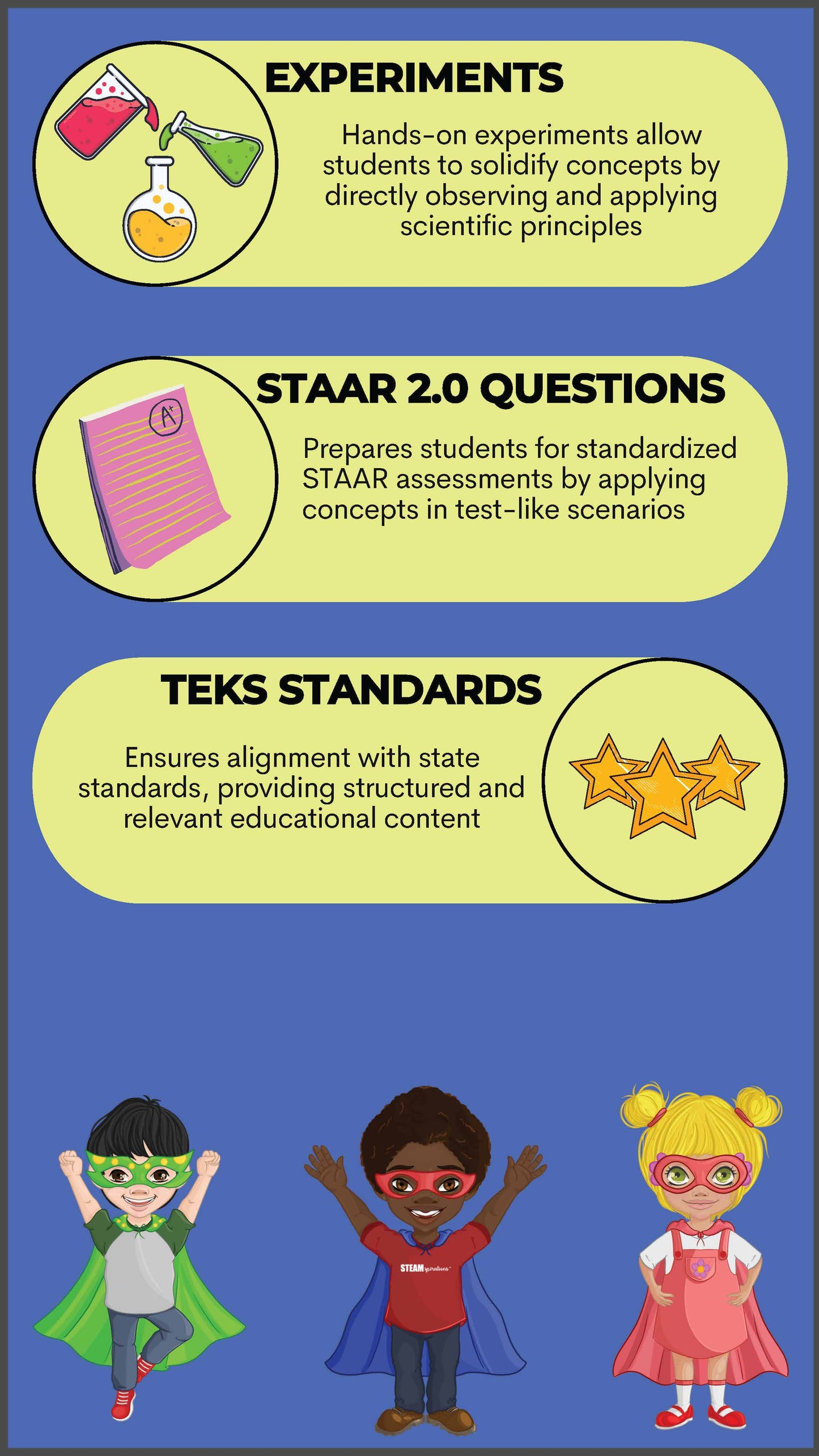
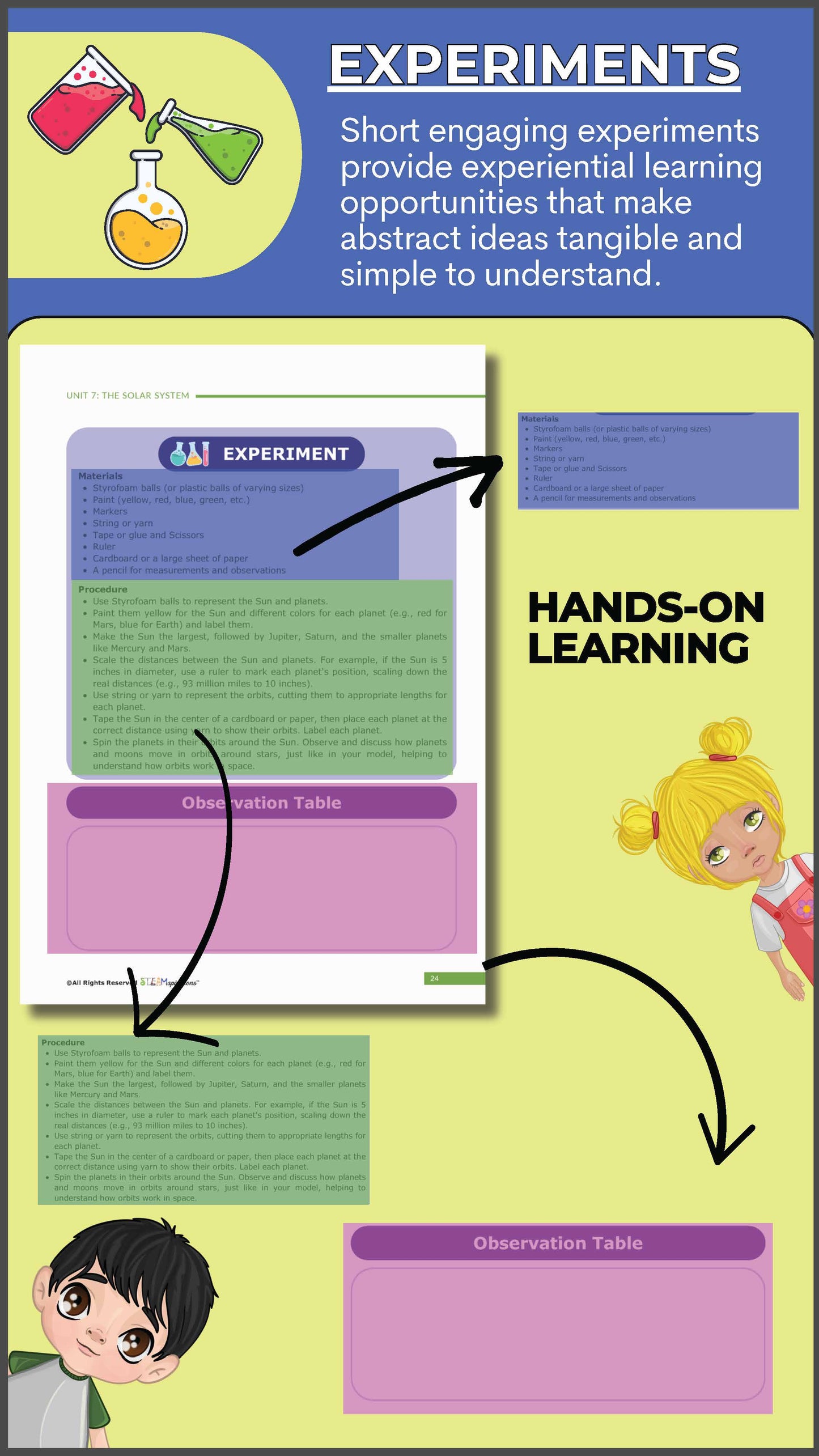
- Planetary Orbits: Simulating the movement of planets around the Sun using models.
- Inner Planet Comparisons: Investigating temperature differences and conditions.
- Outer Planet Simulations: Exploring atmospheric and surface properties using creative materials.
These experiments make abstract astronomical concepts tangible and relatable.
3. Thematic Focus on Astrobiology
Science Meets Real-World Exploration
This unit introduces students to the exciting field of astrobiology, exploring questions about life beyond Earth. Through the study of icy moons like Europa and Titan, students learn how scientists search for signs of life in extreme environments.
Connecting STEM Concepts
- Celestial Mechanics: Understanding how gravity and orbits work.
- Astrobiology: Investigating what makes a planet or moon potentially habitable.
4. Structured and Scaffolding Learning Approach
Building Foundational Concepts
Key ideas are introduced systematically with scaffolded activities and guided inquiry to ensure comprehensive understanding.
Enhanced Learning Pathways
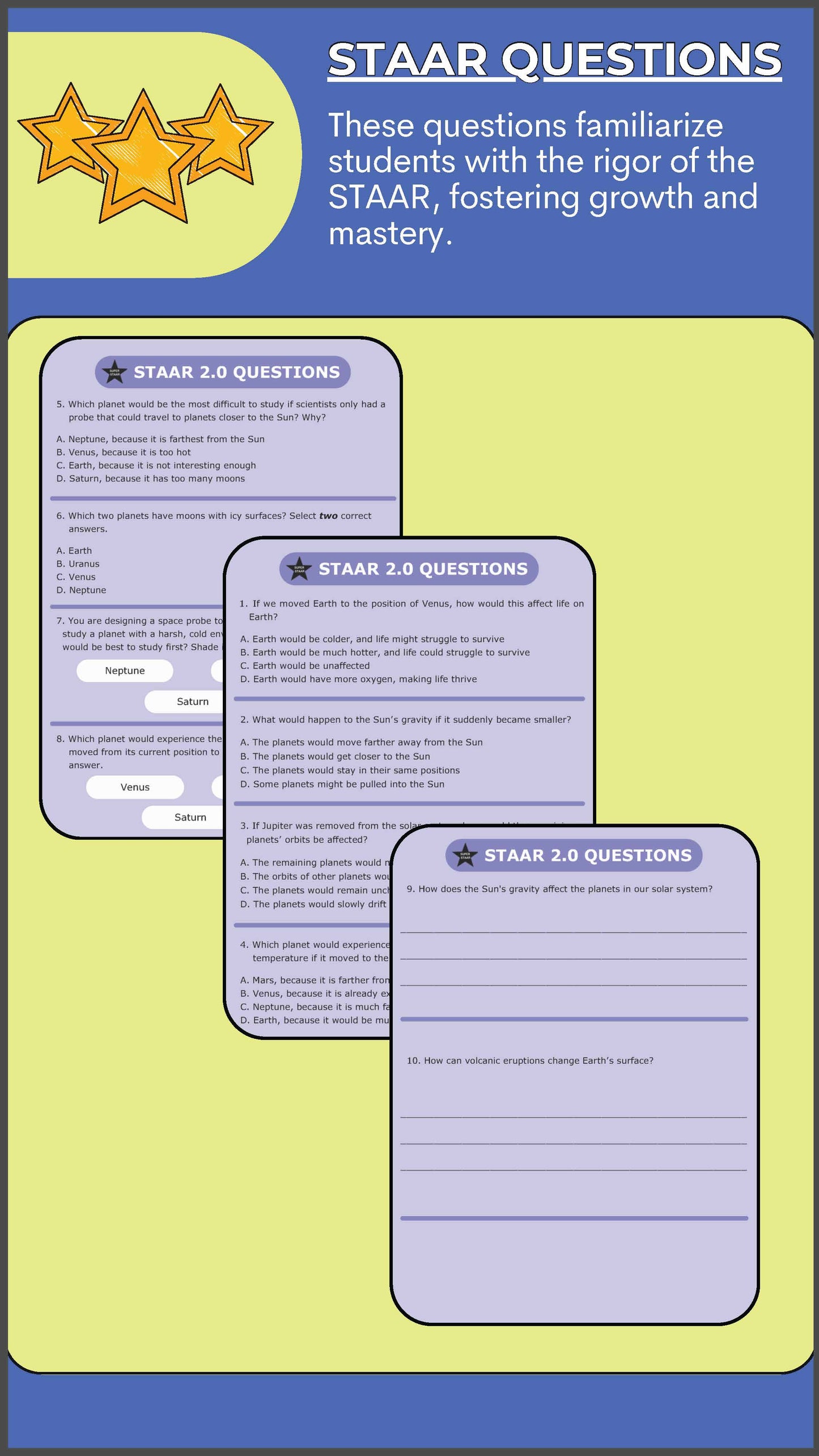
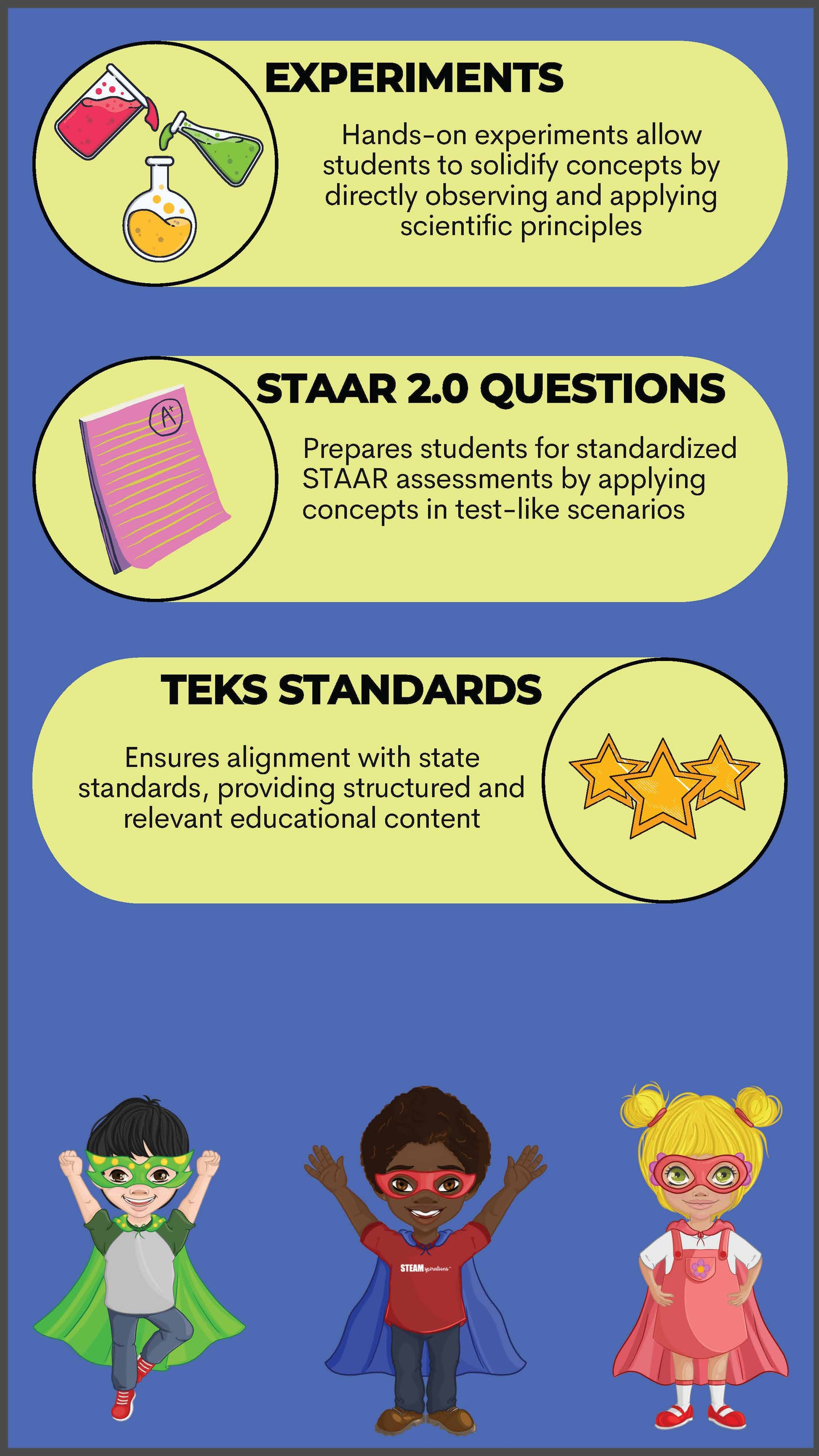
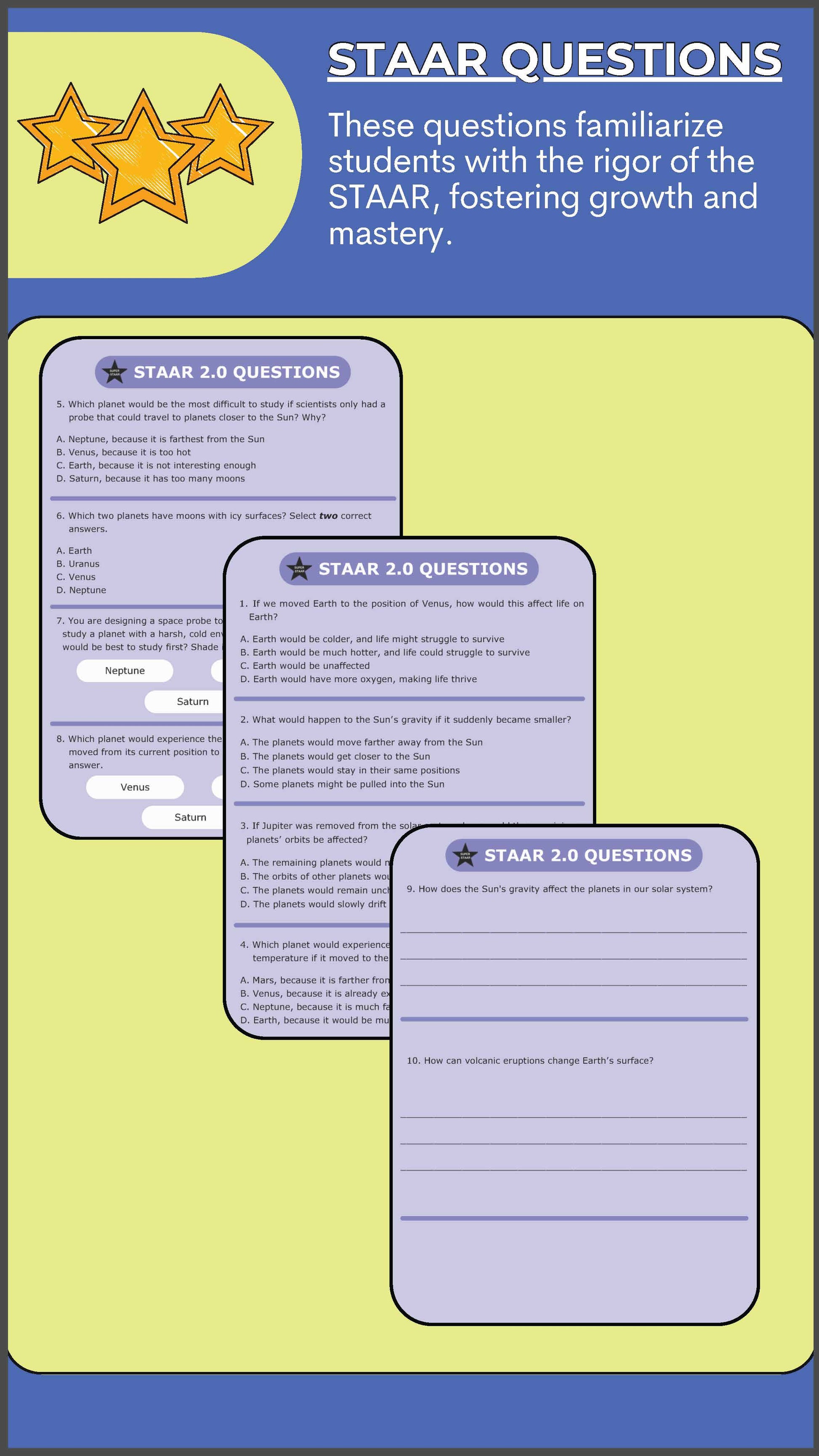
- Interactive Activities: Designed to align with STAAR 2.0 standards, promoting rigor and engagement.
- Collaborative Learning: Encouraging teamwork and problem-solving through discussion and shared projects.
5. Critical Thinking Through Guided Inquiry
Incorporating 3-D questions, students will analyze, predict, and evaluate scenarios related to planetary movement, characteristics, and the potential for extraterrestrial life. These guided inquiries encourage deeper thinking and real-world applications.
6. Assessment and Mastery Focus
TEKS and STAAR 2.0 Alignment
Periodic assessments and STAAR 2.0-aligned questions ensure students achieve mastery of solar system concepts, building confidence and readiness for future academic success.